From the bid to the handover, an agent does the work.
Every part of the job has an agent working it, the way a sharp project engineer would: read what came in, update the record, tell the right person and draft what goes out. Your people approve it, change it or send it back.
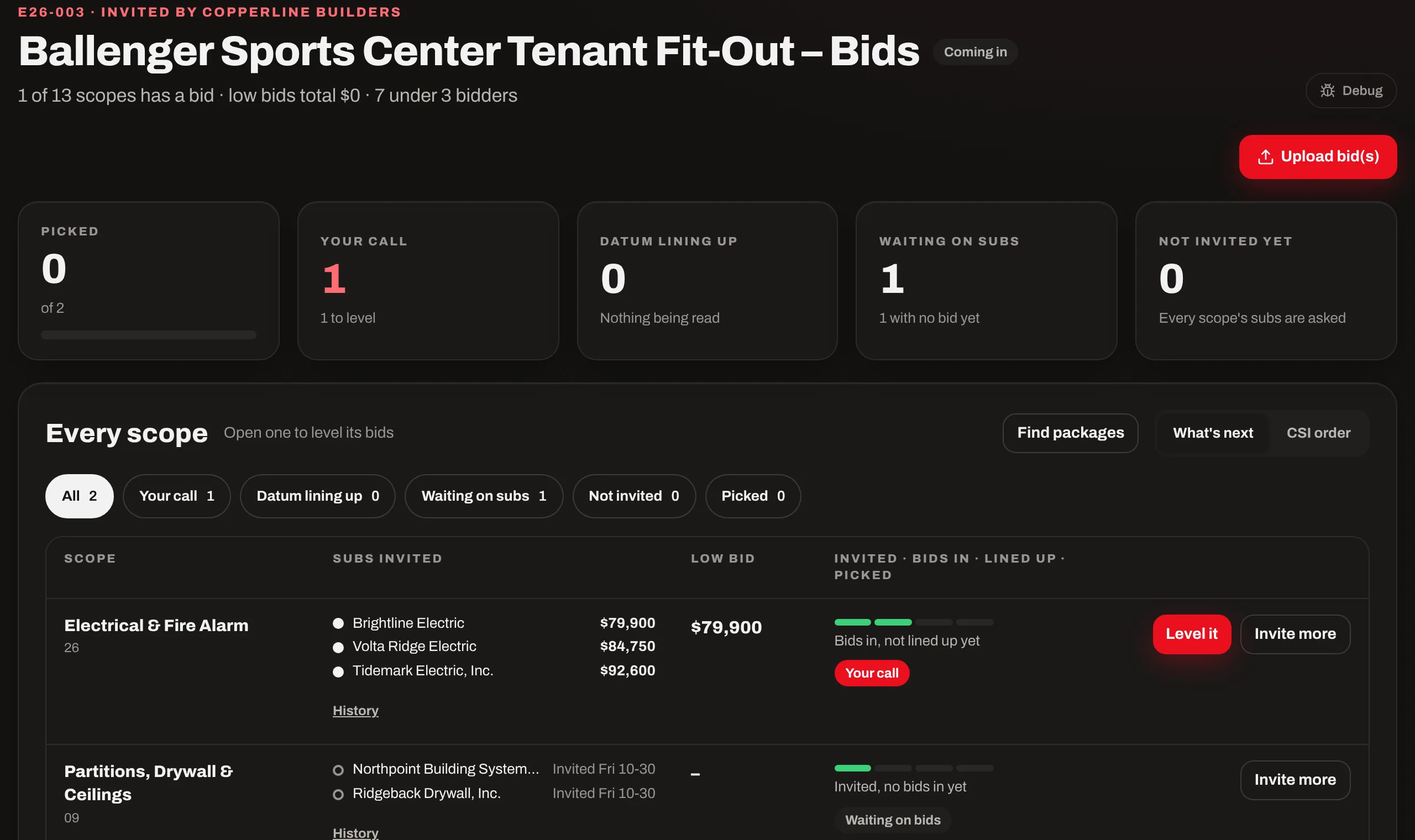
The scope book writes itself from the drawings.
The estimating agent reads the drawings and specs, proposes each scope with its sheets and the subs from your directory, invites them, and levels every bid as it was sent: what it includes, what it leaves out, and the gap to close. Win the job, and the estimate becomes the owner contract, the schedule of values and the budget, line for line.
- Questions for the architect drafted from what the drawings leave unclear
- Each sub's record with you on every invite: response rate, jobs won, punch and safety
- Fee, insurance and bond on top; the margin stays internal
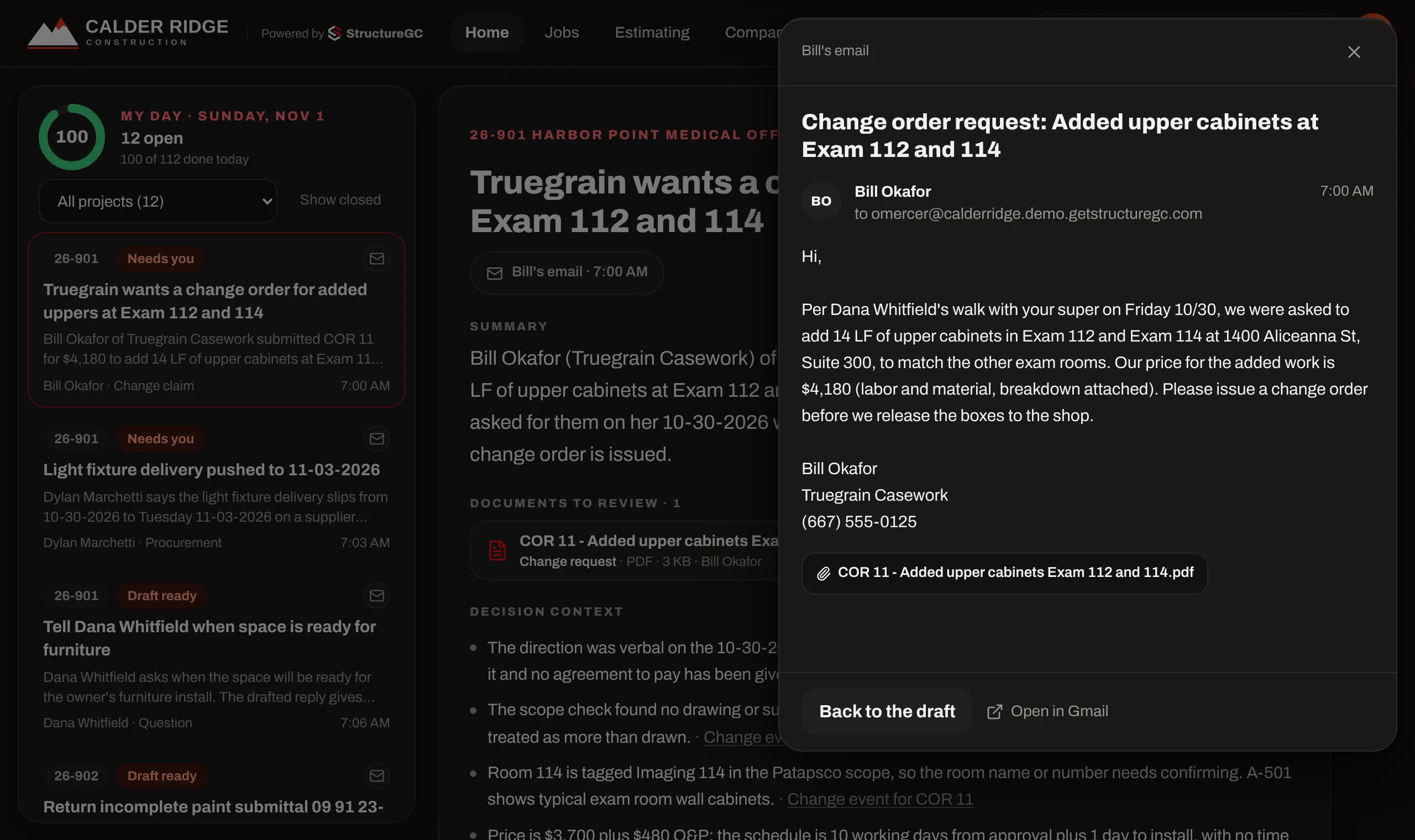
Every email worked the moment it lands.
Agents read every email, find the job and do the work. When the owner asks for extra casework on a walk, they price the change from the sub's quote, hold the order it affects, and draft the PM's reply, with each action open to look at before it's written.
- Replies stay drafts until the PM approves them, and go from the PM's own Gmail
- Before an RFI or a change goes out, it's checked against the drawings, specs and subcontracts
- Datum, the assistant, takes the meeting notes and drafts the minutes and follow-ups
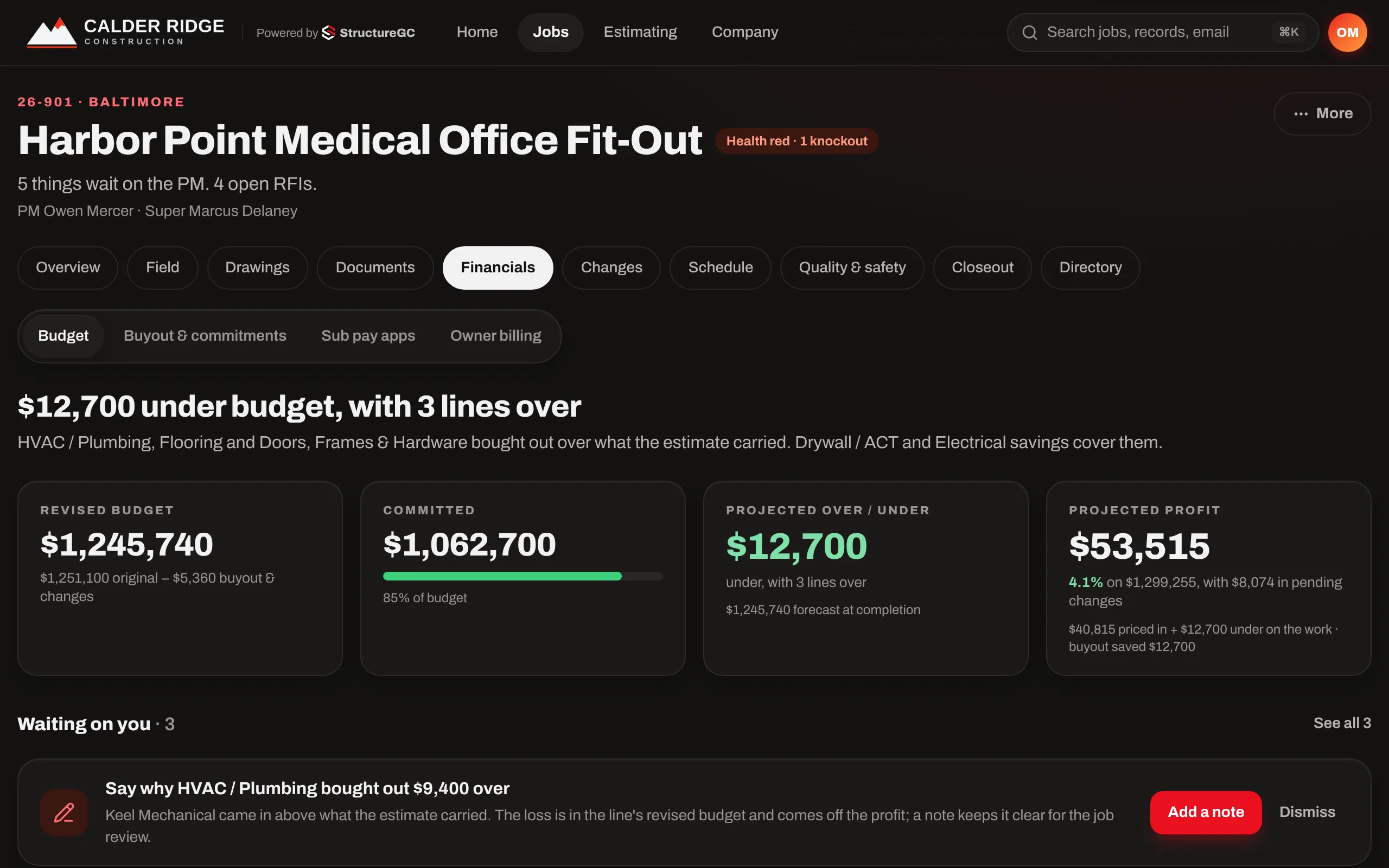
Every number explained.
Each budget line shows where its number came from: the sub's bid, your mark-up, what buyout saved or cost, and every change order. A loss stays on its line with a note saying why. When the scheduler sends a P6 update, StructureGC reads it in seconds and tells you what moved.
- Agents can't move money to cover an overage; scope moves only when a person approves
- Buyout tracked from the letter of intent to the signed subcontract
- Milestones against the baseline, with the critical path drawn
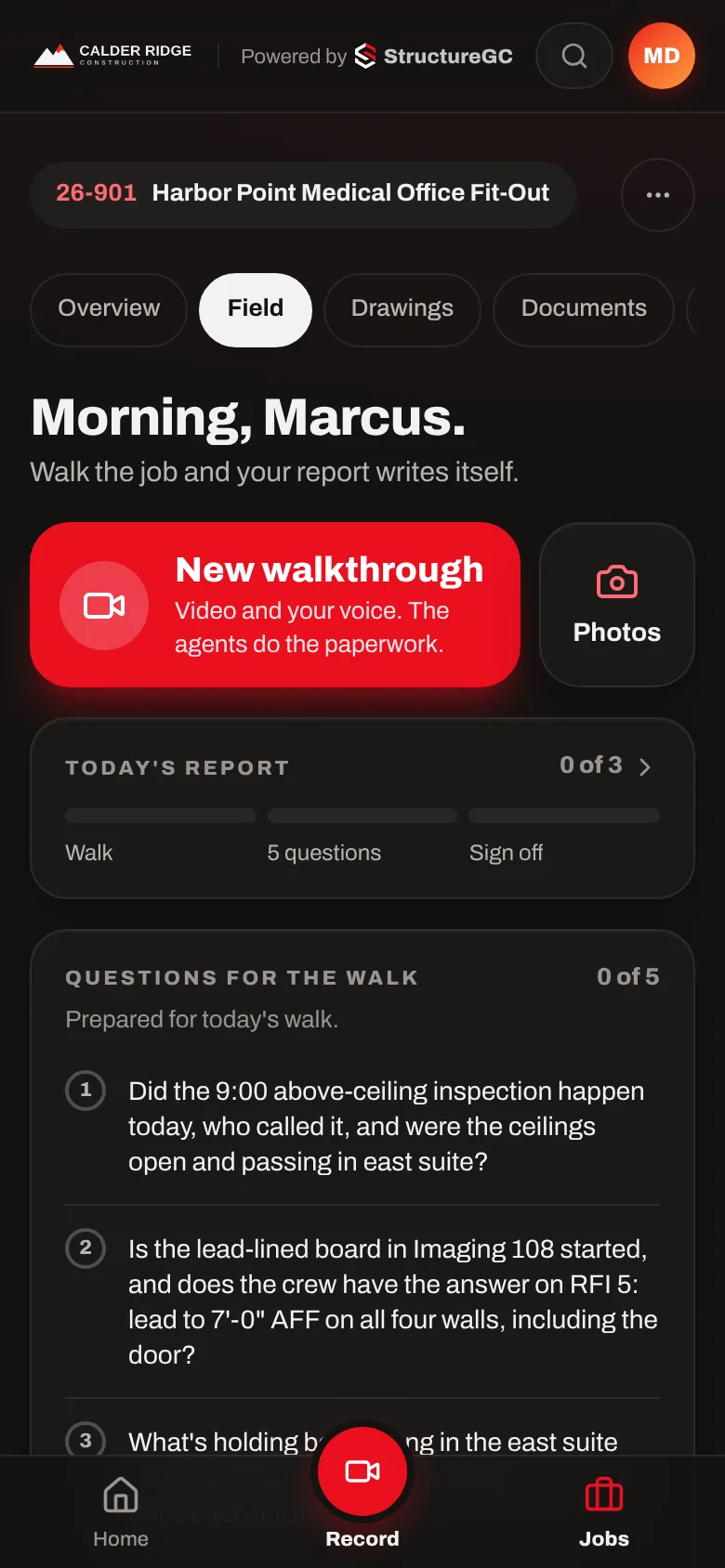
Every bit of context, before the super decides.
Supers walk with their phone. Every drawing, RFI, submittal and email on the job is in their pocket, and Datum answers their questions with the source. The daily report writes itself from the walk, and the safety officer flags hazards with the exact OSHA paragraph.
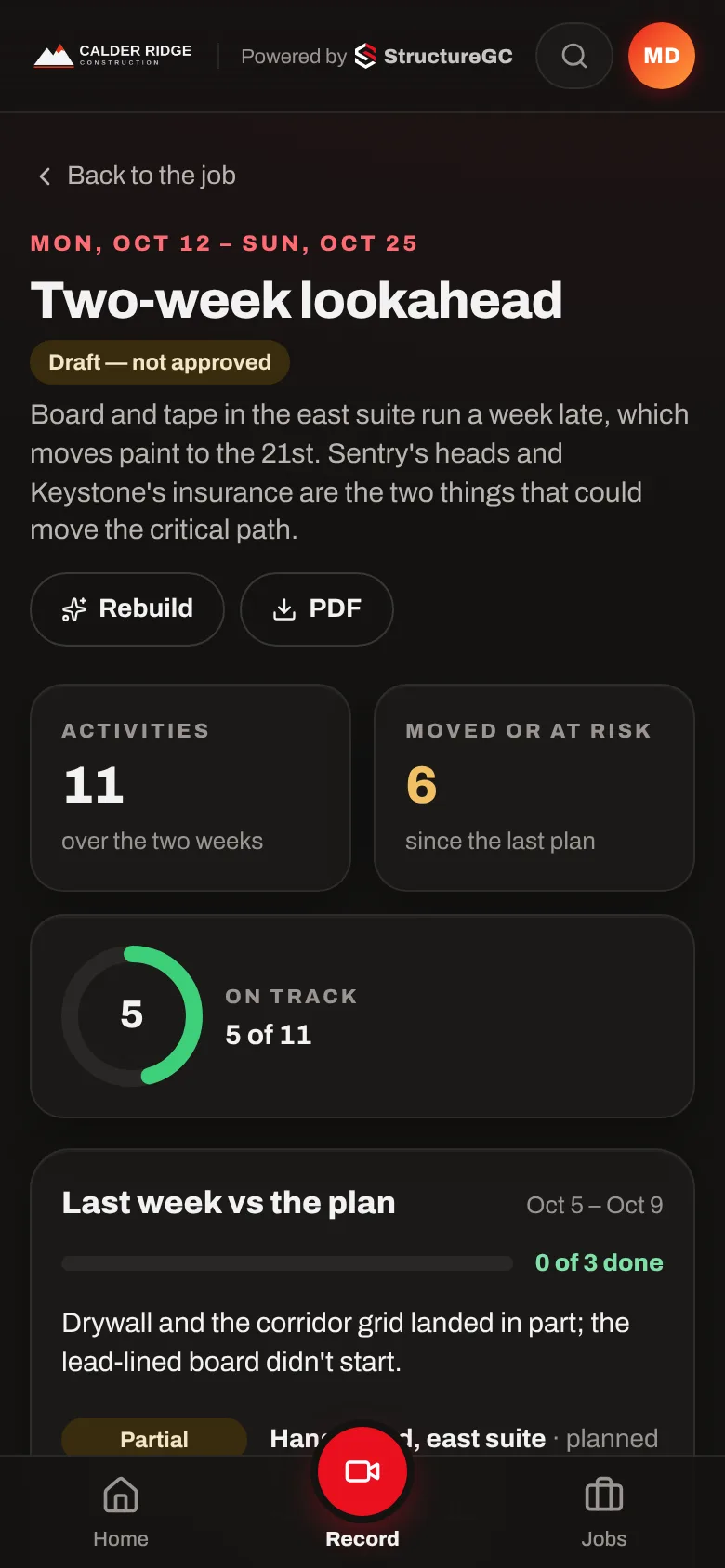
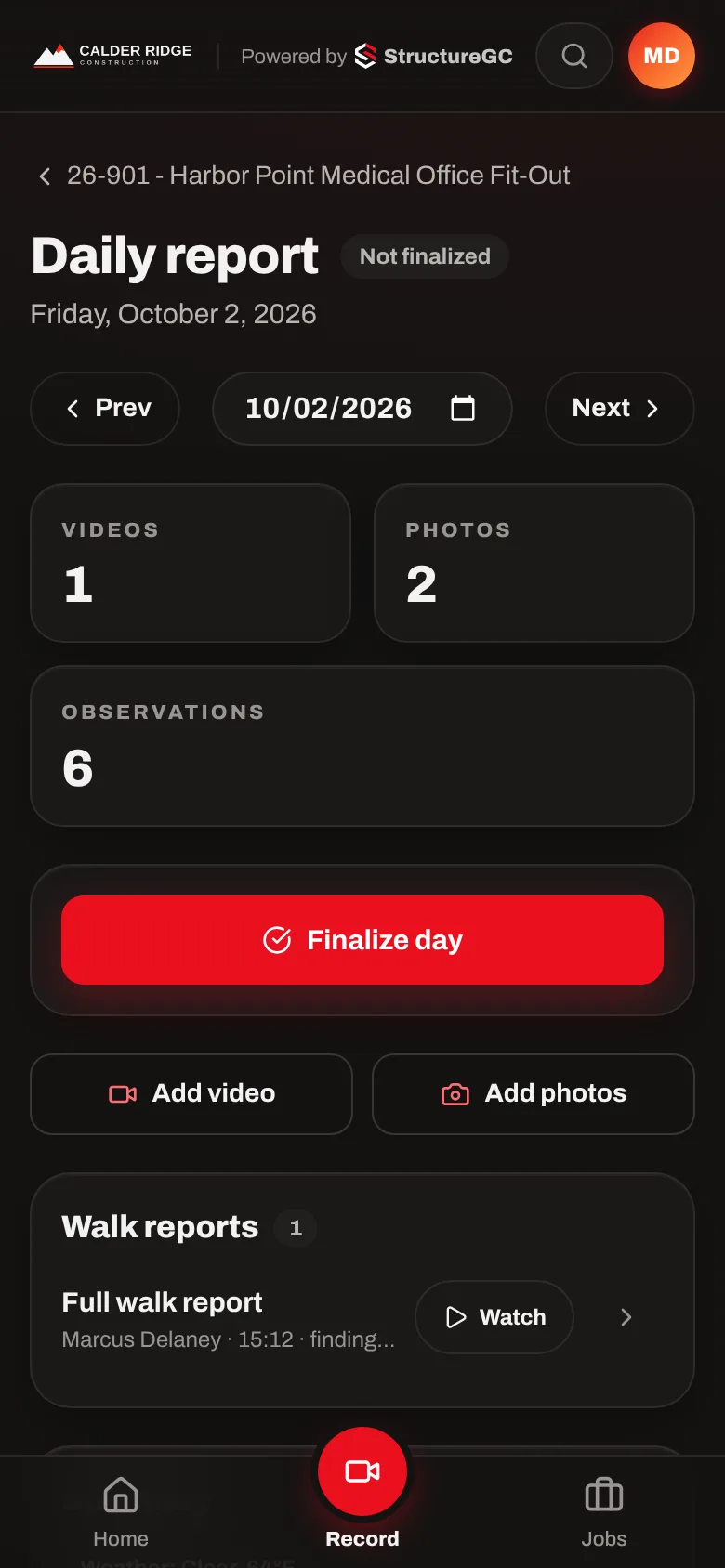
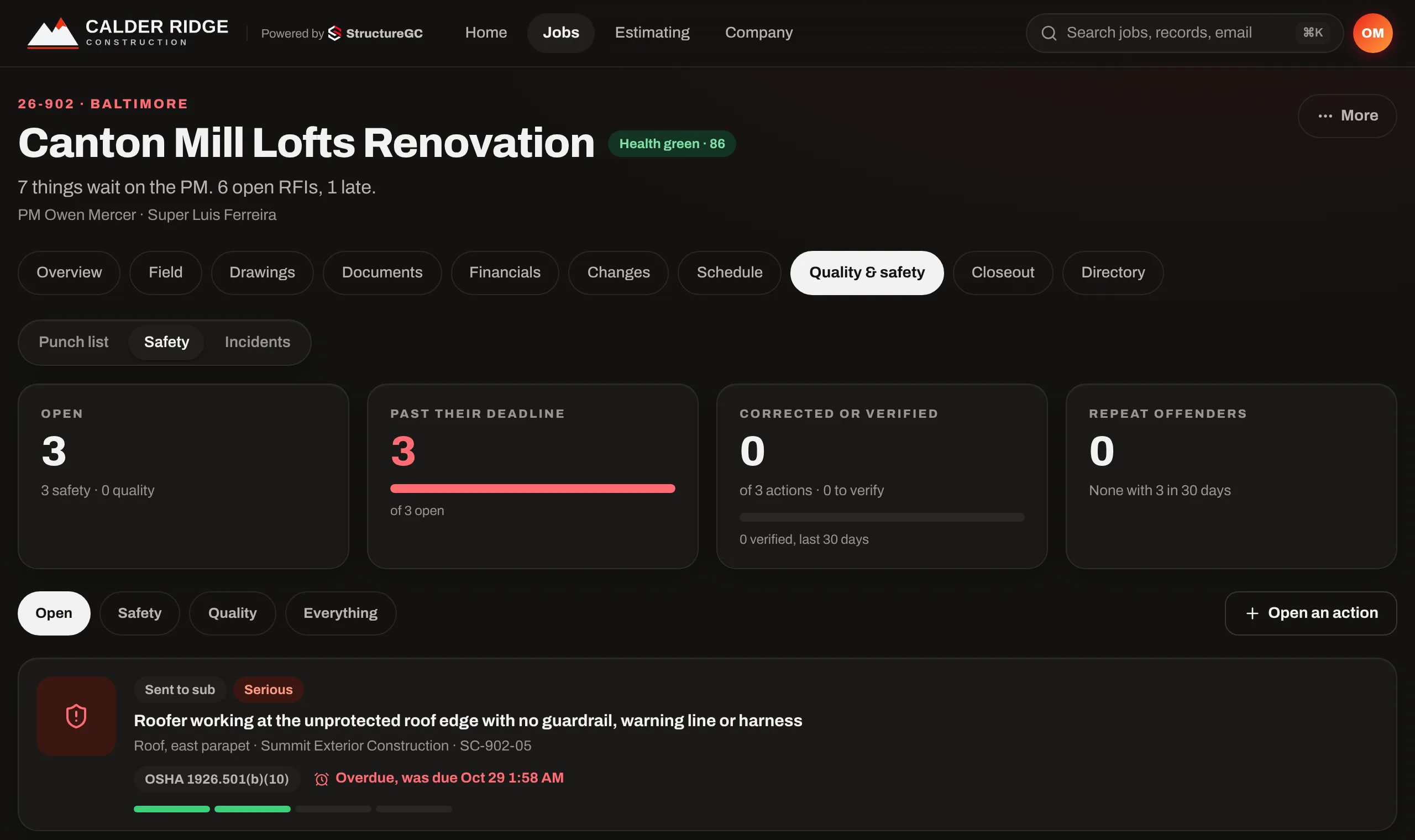
Every photo reviewed. Every hazard tracked until it's fixed.
The Safety Officer reviews every walk and photo. A serious hazard becomes a corrective action for the responsible sub, with the photo, what to do, a deadline, and the OSHA paragraph it breaks, quoted word for word from the regulation.
- Imminent danger reaches the super and PM at once
- Punch items matched to each sub by trade, sent as a PDF, with reminders that send themselves
- Fixes verified by the super; repeat offenders flagged to the PM
Billed on time. Nobody paid by accident.
The field drives the money. The owner's pay app is drafted line by line from the work actually in place, and goes to the owner's portal to approve and sign. Certificates of insurance come in by email and get read, checked against your rules and tracked to expiration. A sub that lapses is chased and held from payment until it's fixed.
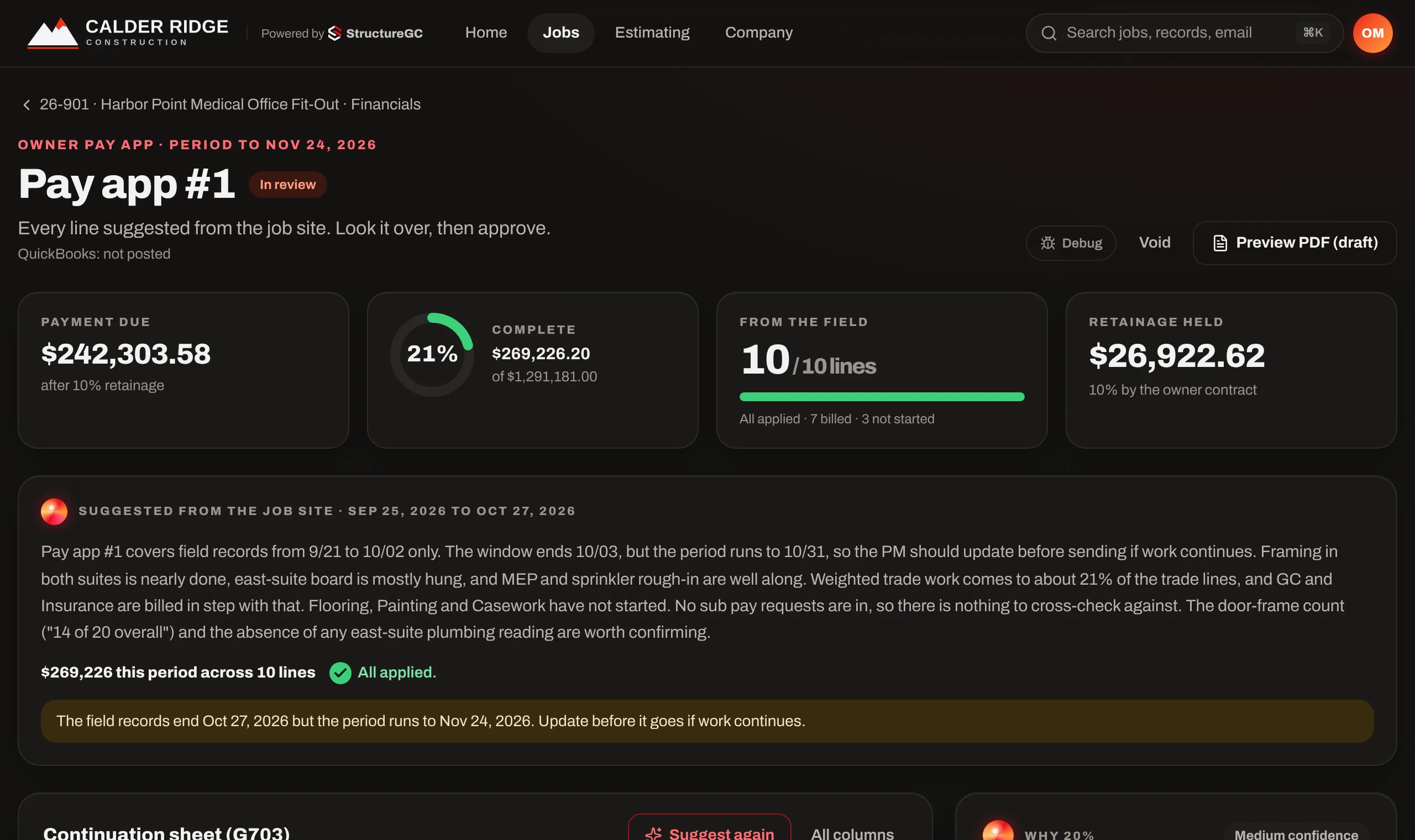
The pay app starts itself from the field.
Each line's percent is drafted from the walks and daily reports, against the schedule of values. The PM adjusts it, it's approved, and the owner reviews and signs it in their portal, from a link sent from the sender's own mailbox.
- Retainage, change orders and previous certificates carried forward
- Late pay apps and what's due to bill this month, on accounting's screen
- Payments received add up against what the owner owes
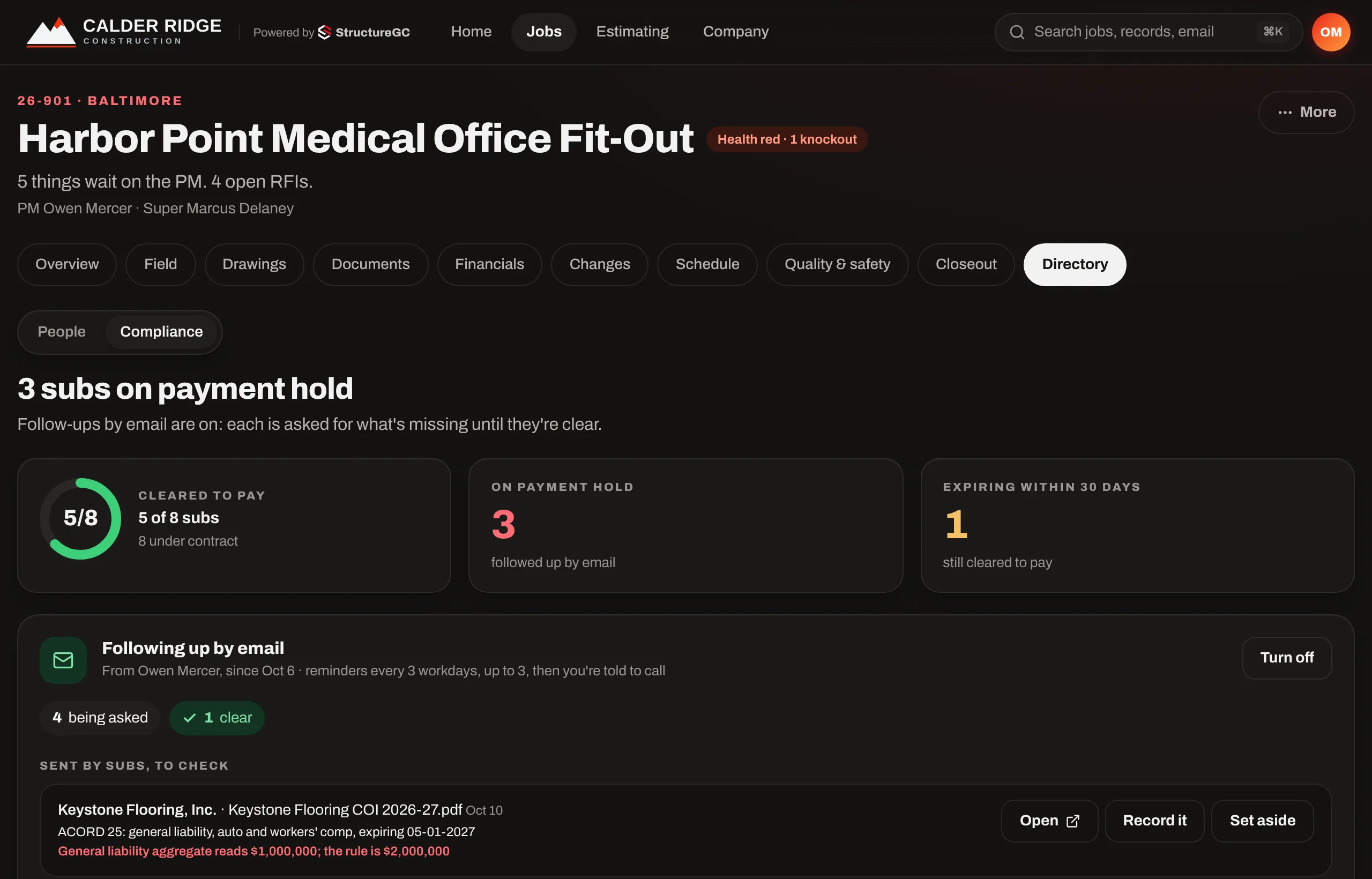
Insurance checked against your rules, on every sub.
Certificates are read the day they arrive and checked against your limits, additional insured, waiver of subrogation and umbrella rules. Every sub pay app is matched to its subcontract, its lien waivers and the sub's compliance before it's ready to pay.
- Subs on hold chased by email, from your own mailbox, until they're clear; what they send back is read and recorded
- A sub on hold can't be paid on any job until it's fixed, with the reason on the screen
- Over-billing against the subcontract caught at review
A checklist that fills itself.
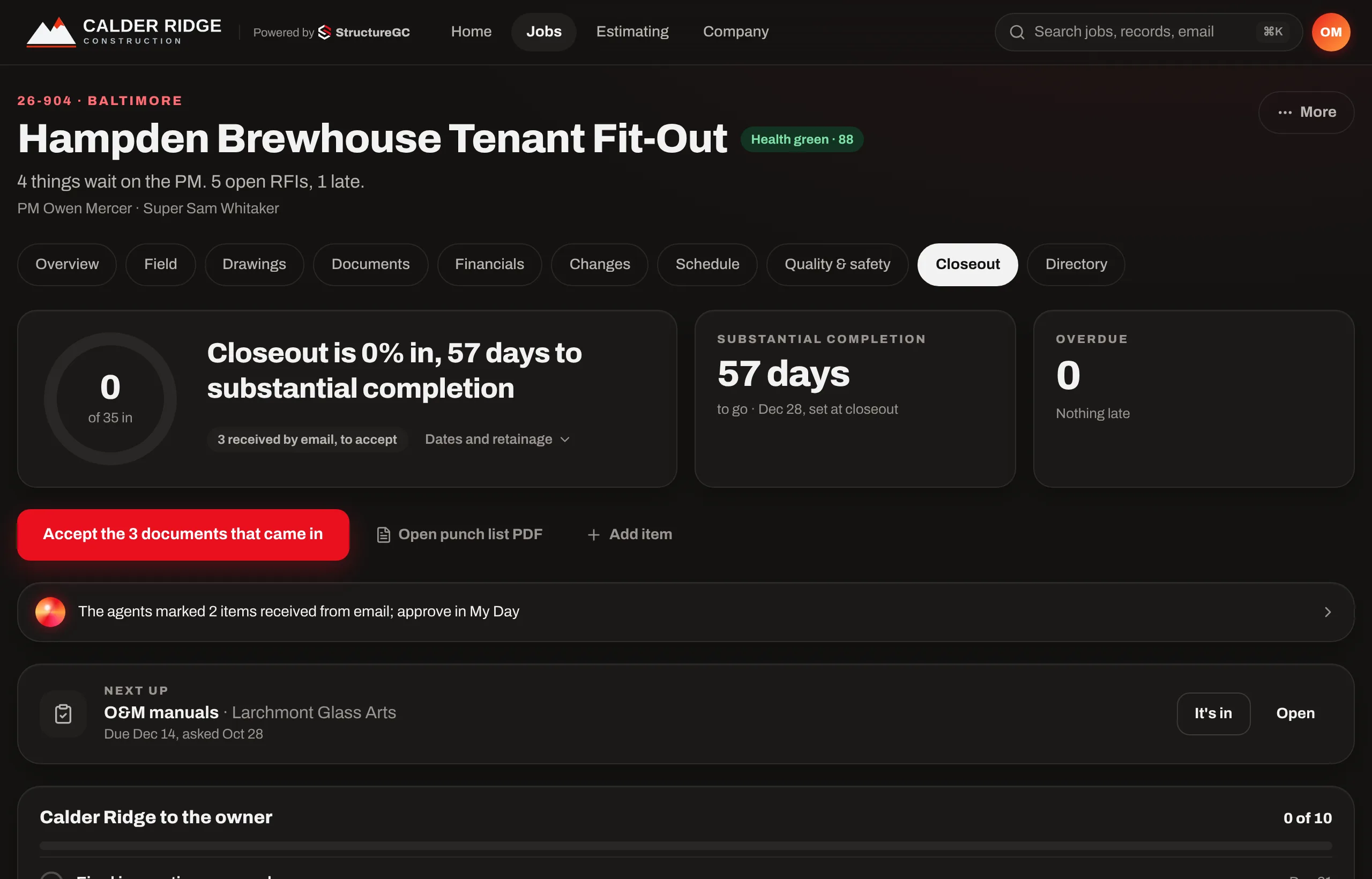
Thirty-five items, and nobody chasing them by hand.
Closeout starts from your template against substantial completion: what the job owes the owner and what each sub owes you. Punch closes as subs finish, final waivers tick when the pay apps clear, and the closeout specialist chases the O&M manuals, warranties and as-builts every week.
- Documents that arrive by email marked received, for the PM to accept
- The open punch list as a PDF, for the whole job or one sub
- The owner signs the final pay app in their portal
Agents that work like a good APM, not a black box.
Nothing goes out unapproved
Every reply, record and payment an agent prepares waits for a person. Approve it, edit it or send it back.
They ask when they're not sure
An agent that can't place an email or find a fact stops and asks, with the email attached and suggested instructions ready.
Money moves only on a yes
Agents and Datum can't move budget to cover an overage. A loss stays on its line with a note, so the job review is honest.
Every answer names its source
Datum answers from the drawings, specs, RFIs, submittals and email on the job, and shows where each answer came from.
Every action is on the record
What each agent read, filed, changed and drafted is logged against the job, with who approved what and when.
OSHA quoted, never paraphrased
Safety notices quote 29 CFR 1926 word for word from the regulation StructureGC keeps current, with the link.